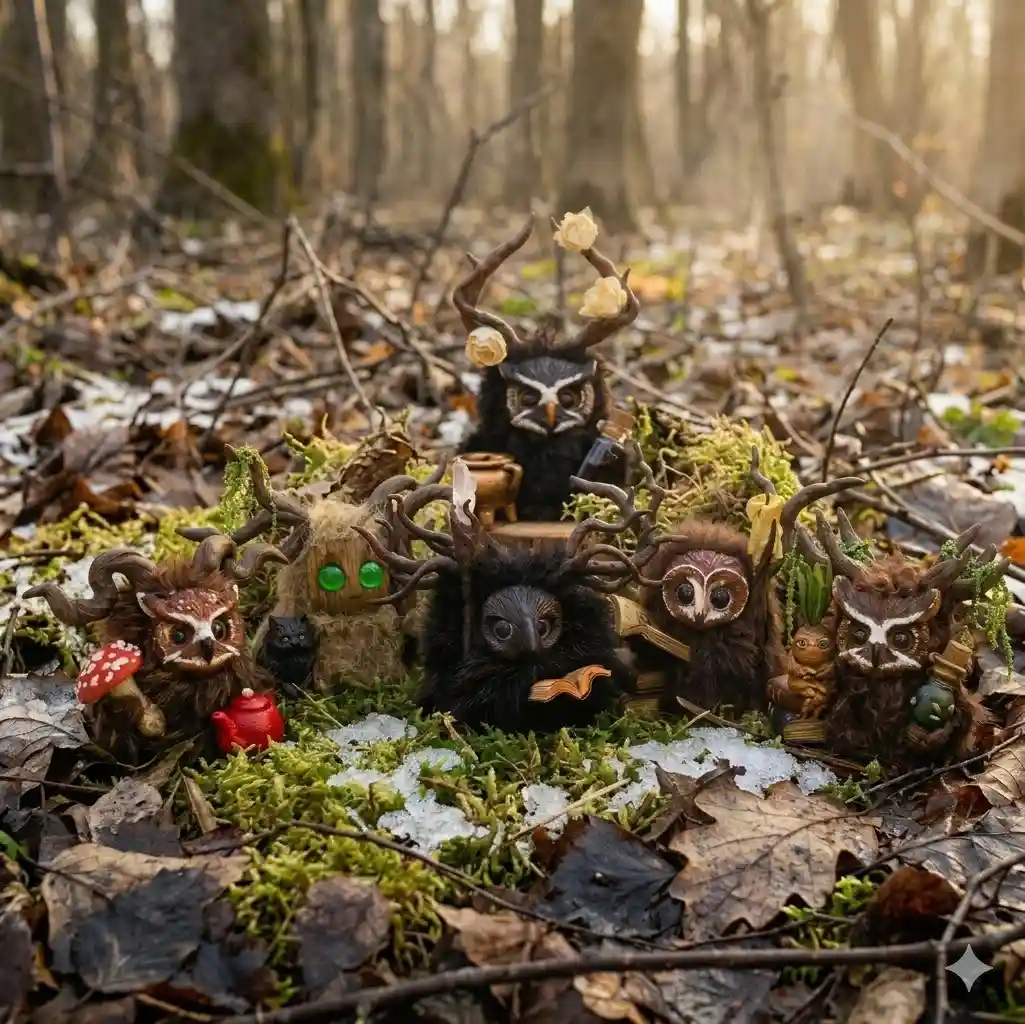
There is a moment every person who has walked deep enough into a real forest knows: the moment when the trees close overhead, the sounds of the road disappear, and the forest becomes something other than a place you are passing through. It becomes a presence. Something watches. Something notices you have arrived.
Every human culture that has lived beside forests has had a name for this feeling — and a being to attach it to. The forest spirit is one of the oldest categories of the supernatural, older than written mythology, older than most named gods. It answers a question that every forest-dwelling people in ancient times eventually asked: what is this place when we are not in it? What moves through it at night, what decides whether the hunter finds game or gets lost, what rustles in the undergrowth with no visible cause?
This is the story of those presences — and of the handmade creatures born from the tradition they left behind.
The Leshy: Master of the Slavic Forest
In Slavic mythology, the forest has a clear ruler: the leshy (also leshiy, leshi), whose name comes from the same root as the word for forest itself. He is the forest's sovereign — master of every tree, every animal, every path through the undergrowth. What he does not own, he nonetheless oversees.
He is a shape-shifter. He can appear as a giant whose head breaks through the canopy, or shrink to the size of a mushroom. He can become a whirlwind, a tree, a familiar acquaintance on the road. His eyes shine with a cold light. He has no shadow. When he walks among the trees, birds fall silent.
The leshy is not evil — but he is territorial. Hunters who showed respect, who asked permission before entering the forest and thanked it when they left, found game at every turn. Those who were careless, who wasted what they killed, who boasted in the forest, were led in circles until they collapsed. The leshy's forest was not a resource to be taken from — it was a world with its own authority, and he was that authority.
Associated with the leshy was a whole ecology of lesser forest spirits. The borovy protected pine forests specifically. The poludnitsa — the Lady of the Noon — appeared in forest clearings at midday, driving field workers mad. The dvorovoi was the spirit of the yard, a domestic cousin of the forest's sovereign. Together they formed a layered supernatural landscape where no part of the natural world was uninhabited.
The Green Man and the Ancient European Tradition
Walk through a medieval European cathedral and look carefully at the stone carvings. You will find him everywhere: a face surrounded by leaves, or made entirely of leaves, or with foliage pouring from his mouth. This is the Green Man — one of the most persistently carved images in European architecture, found from the 2nd century CE through the late Middle Ages, across cultures that never met each other.
He does not appear in any written theology. No text names him or explains what he represents. He was carved by anonymous hands and left without commentary, which suggests that those who carved him did not think he needed explanation — he was something everyone already understood. A face that was also a forest. A face that was the embodiment of the forest.
The Green Man connects to a deep Indo-European current of thought: the idea that vegetation has personhood, that the growth of plants is animated by a spirit that can be encountered, propitiated, even befriended. In Celtic tradition this current ran through the figure of Cernunnos, the antlered god of wild things. In Norse mythology it appeared in the world-tree Yggdrasil, which was not merely a cosmological diagram but a living being with its own fate. In Greek myth it surfaced as the dryads — tree spirits who died when their tree was cut — and the woodland gods Pan and Faun.
Tree Spirits of the World: Dryads, Kodama, and the Ones With No Name
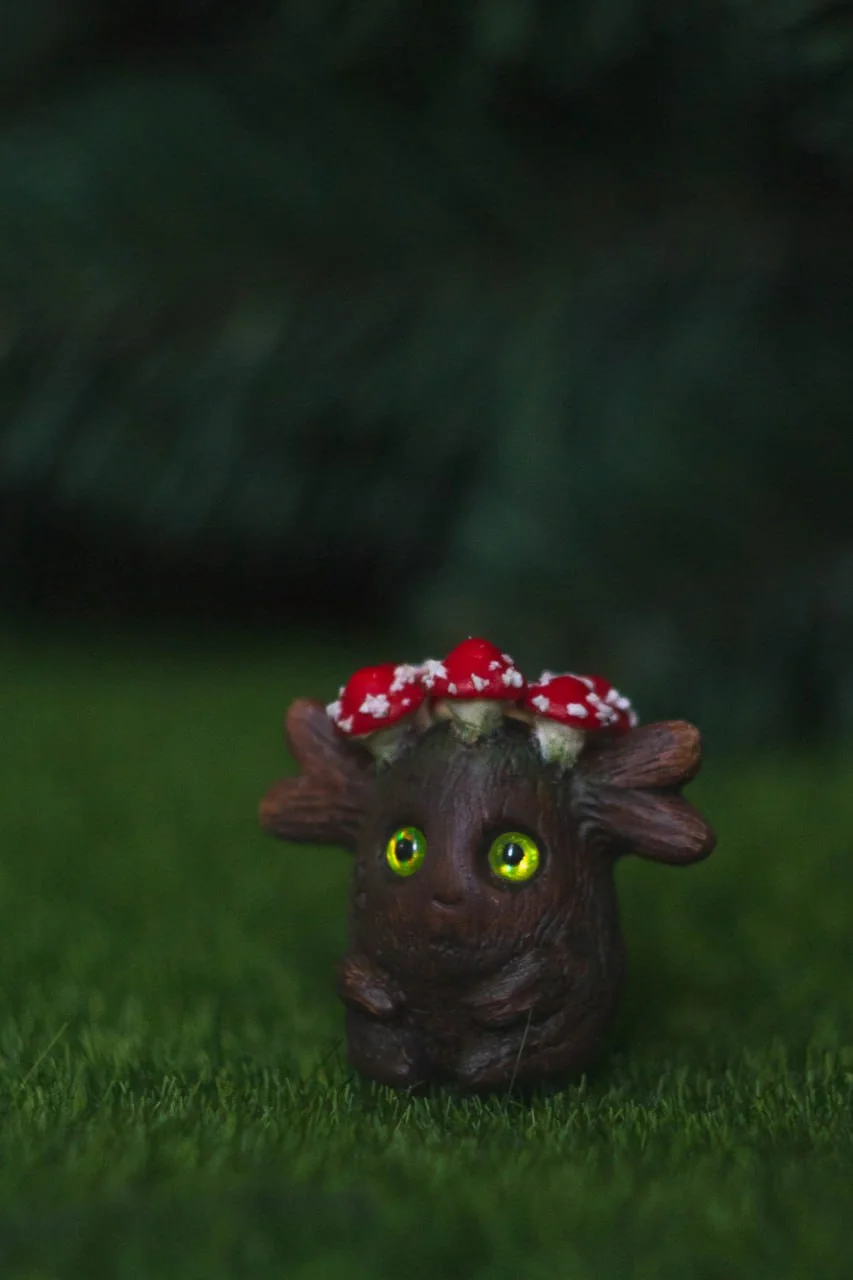
The Greek dryad was a nymph whose life was bound to a single tree — most often an oak. When the tree died, the dryad died with it. Cutting a dryad's tree was not merely vandalism; it was a kind of murder, and ancient sources record that offenders were sometimes punished by the gods. The dryad's vulnerability — her complete identity with one particular tree — made the forest personal in a way that the concept of "nature" as an abstract category never quite manages.
In Japanese tradition, the equivalent is the kodama: a spirit that inhabits an old tree and causes the mountain echoes (kodama means both "echo" and "tree spirit" in Japanese). Old trees with kodama were marked with shimenawa — sacred rope — to warn that cutting them would bring misfortune. In the film Princess Mononoke, Hayao Miyazaki depicted them as small, silent beings, which is faithful to one strand of the folklore: kodama are often described as small figures moving through old forests at dusk.
Celtic tradition gave us the concept of nemeton (nenoton) — sacred forest groves where no tree could be cut, where no blood could be spilled. The Roman author Lucan described one near Marseille as so ancient and so charged with presence that even the priests who tended it were afraid to enter at midday, when the spirit was strongest. The forest clearing as temple: a space where the human world acknowledged that the other one had priority.
The Mandrake: Where the Forest Touches Magic
Of all the plants the forest produces, one has attracted more mythology than any other: the mandrake. Mandragora officinarum, a Mediterranean plant whose forked taproot uncannily resembles a human figure — arms, legs, a rough suggestion of a face. This resemblance drove two millennia of elaborate belief.
Ancient Greek and Roman physicians used it as an anaesthetic — it contains powerful alkaloids that can induce sleep or, in larger doses, delirium and death. But the mythology that grew around it went far beyond its pharmacological properties. It was said to grow under gallows trees, nourished by the last drop of a hanged man. To pull it from the earth was to hear it scream — a shriek that could drive the hearer mad or kill them outright. The proper method involved tying a dog to the plant and having the dog pull it free while the harvester stopped their ears.
Mandrakes appeared in European love magic, in fertility rituals, in the preparation of flying ointments. A carved mandrake root kept in the house was believed to bring prosperity. Jewish folklore described the mandrake as a plant that responded to its owner's wishes. Medieval herbalists drew it as a small human figure growing from the earth — root-person, plant-child, the place where vegetation and personhood became indistinguishable.
The mandrake's mythology is essentially the mythology of the entire category of forest spirits compressed into a single plant: the idea that vegetation has interiority — a life, a will, a voice. That the boundary between the living thing and the knowing thing is not where we think it is.
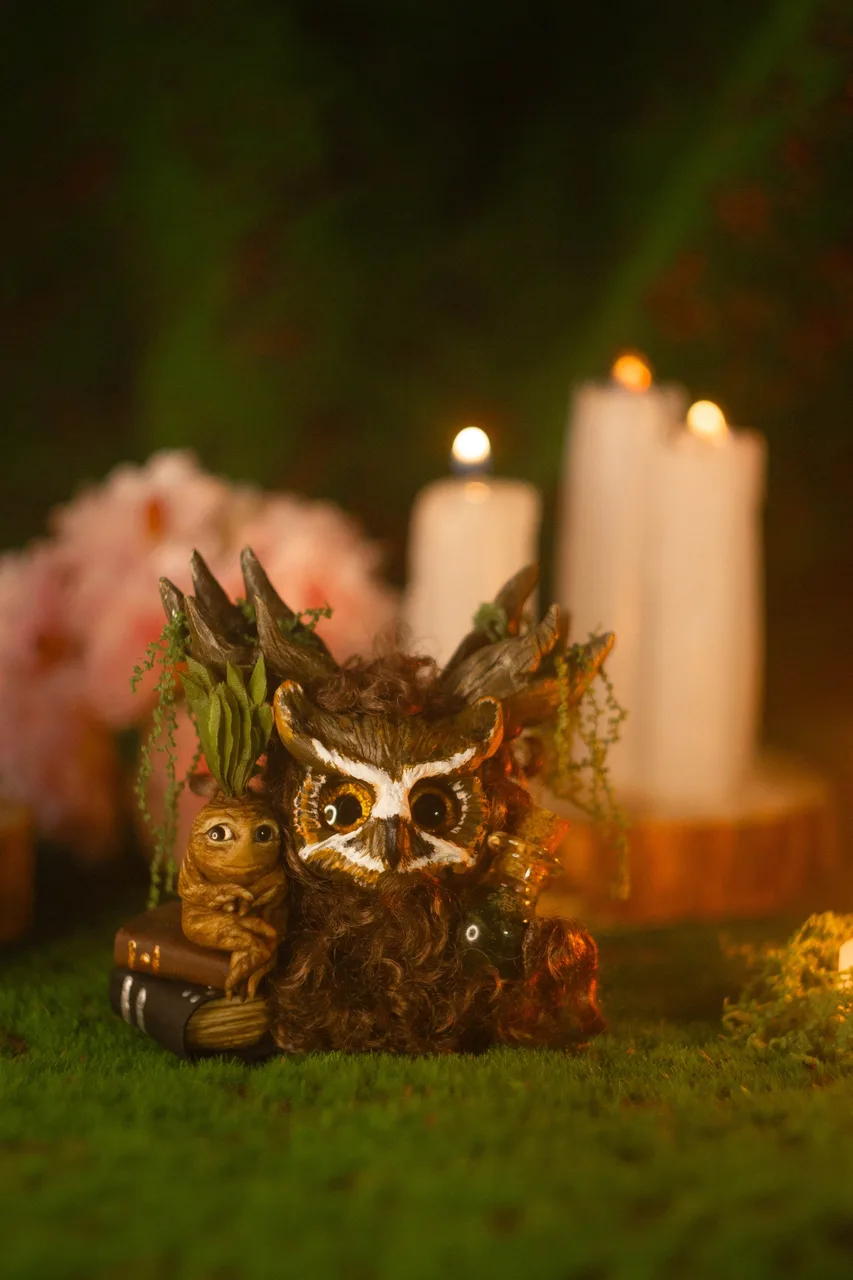
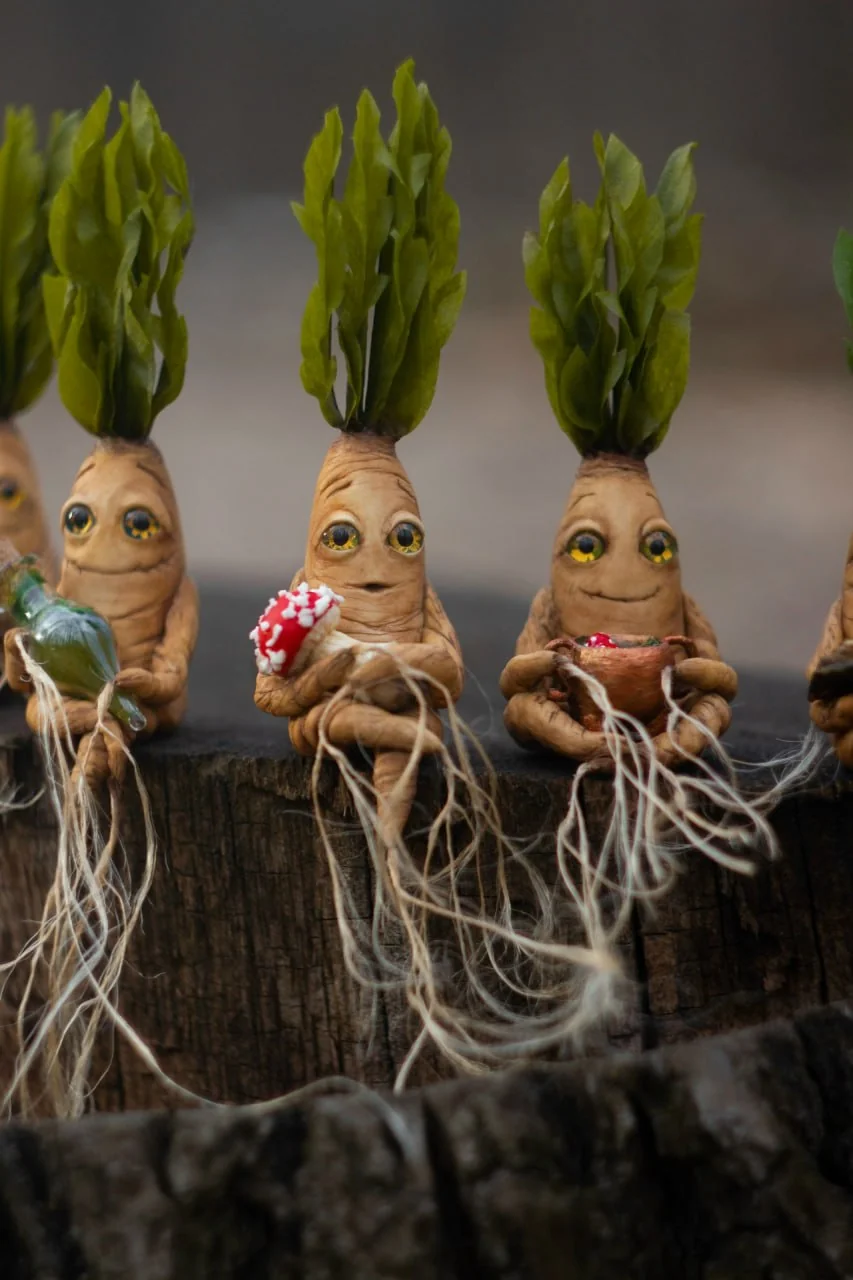
The workshop's mandrakes — the Classic Mandrake, the Mandrake in a Pot, the Mandrake with Item — are made from this tradition: small figures caught at the threshold between root and being, looking at you with the calm patience of something that has been growing for a very long time.
The Wood Spirit as Guardian: Guardians of the Forest and the Wheel of the Year
Many legends about forest spirits organize themselves around time as well as place. The forest is not the same in all seasons — its spirit changes with the light. In Norse tradition, the forest's character shifted with the solstices and equinoxes; different kinds of presences were active at different points in the year. In Slavic folk belief, the leshy went underground in winter and returned at the Spring Equinox, noisy and rearranged after months of absence.
This seasonal quality is one of the defining features of the Wood Spirits at Gnomenlands. Each Wood Spirit is a guardian of a specific threshold — not just of a place, but of a moment in the year's turning.
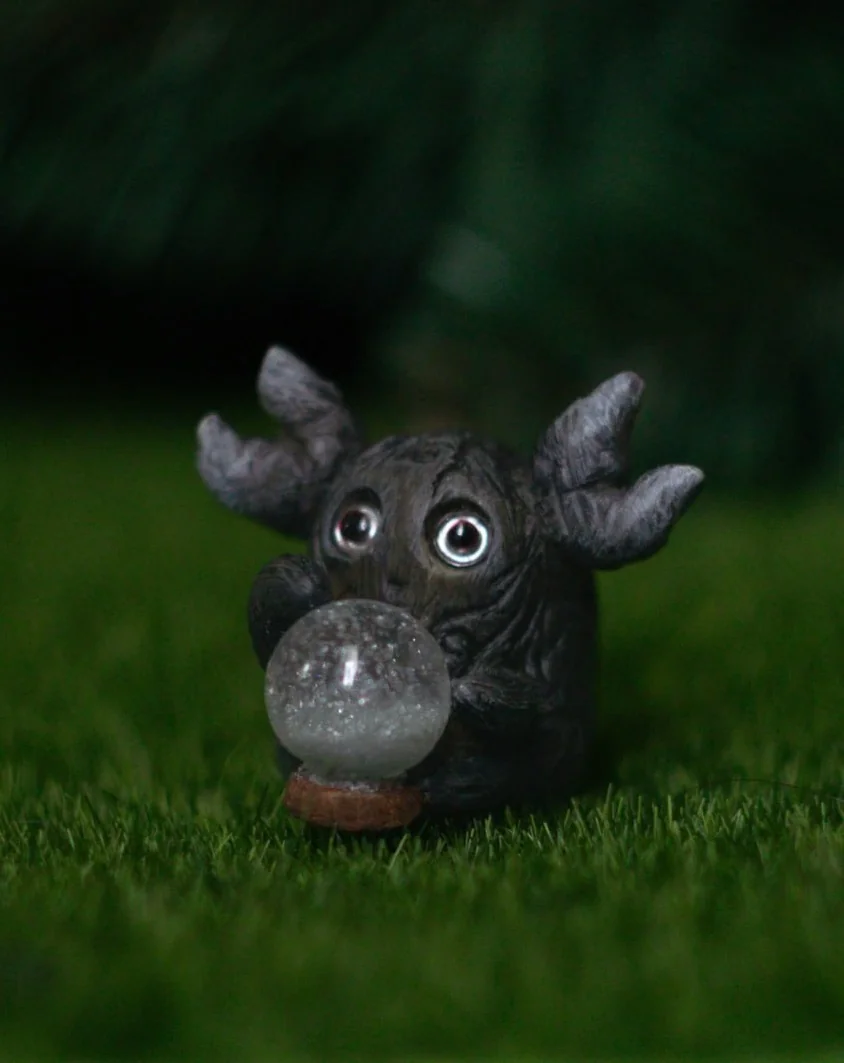
The Wood Spirit Ostara's Breath is the guardian of the Spring Equinox — the held breath before the plunge, the crocus coming up through snow that hasn't quite finished. He carries a glass orb with the first green sprout.
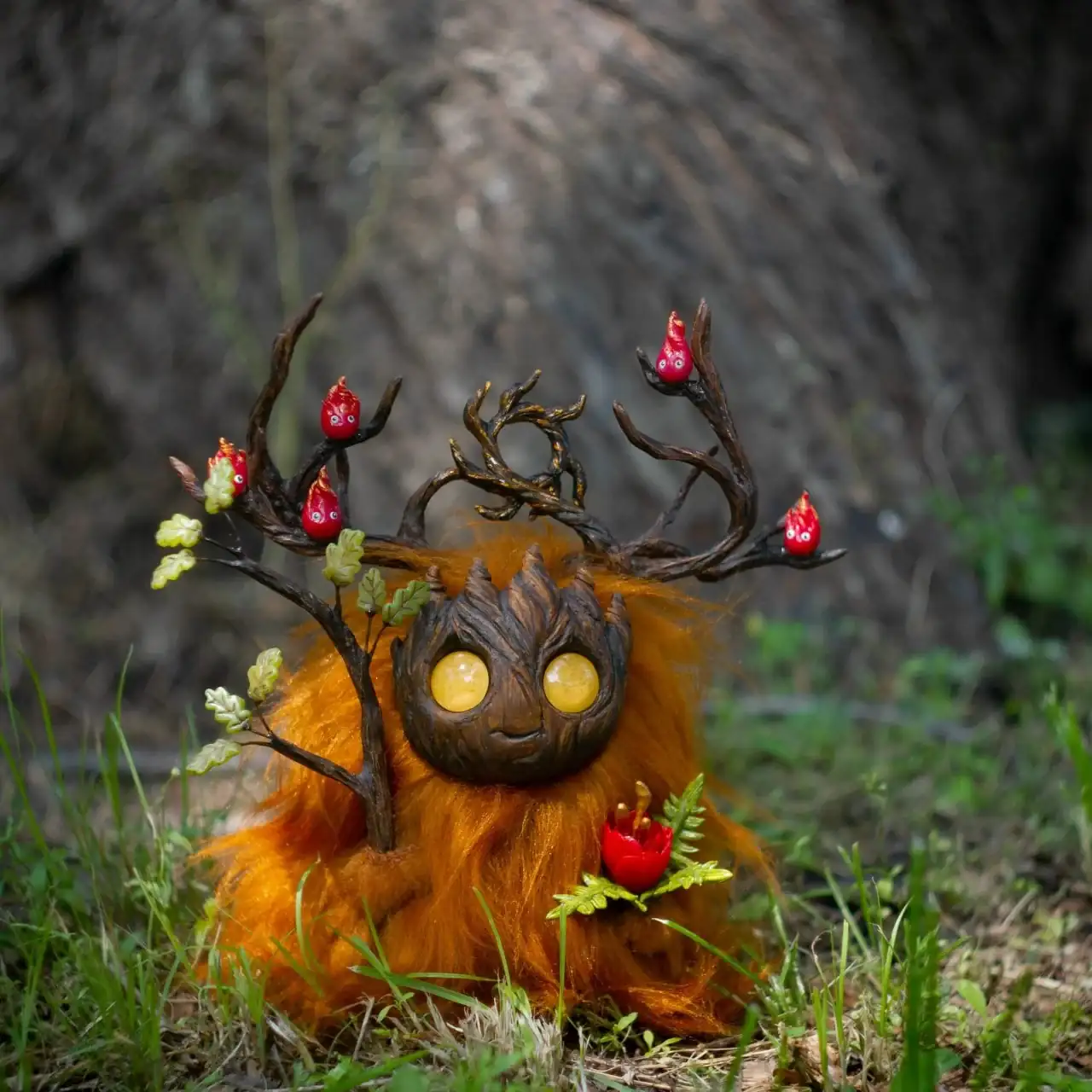
The Wood Spirit Litha Flame embodies the Summer Solstice — maximum light, fire on the hilltops, the moment when the sun is as strong as it will ever be, and the turning begins. In Celtic and Germanic tradition, midsummer fires drove away malevolent spirits and welcomed the forest's warmth; he carries that fire in his antlers.
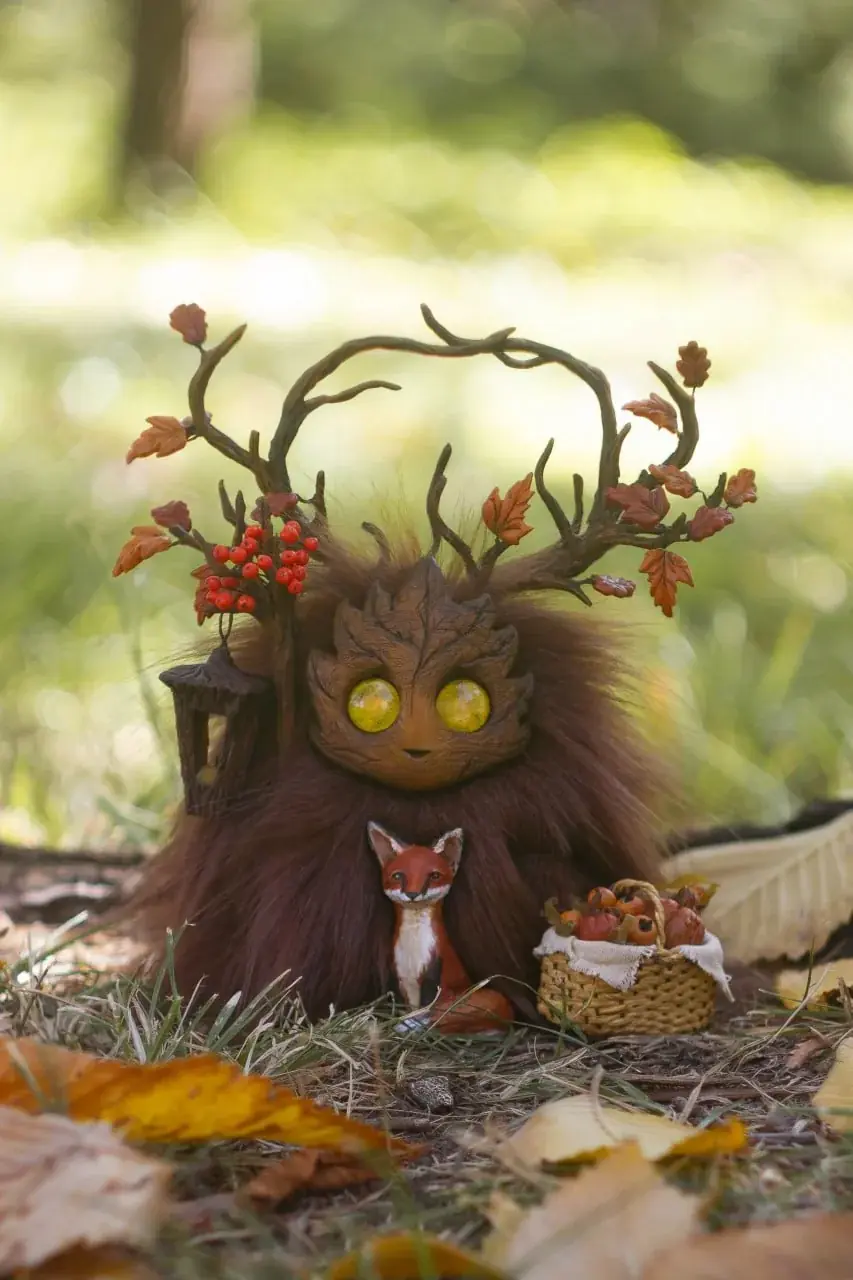
The Wood Spirit Samhain Whisper guards the most important moment of the dark half of the year — the night when the boundary between worlds grows especially thin. In Celtic belief, Samhain was not merely a calendar point but a structural feature of reality: a gap in the year's fabric through which the dead could return and the living could briefly touch what lay beyond. He is the forest at its most mysterious: the cauldron, the pumpkin lantern, the deep dark of November woods.
The Forest That Lives Between the Trees
What makes the forest spirit tradition persist — across cultures, across millennia, in forms as different as the Slavic leshy and the Japanese kodama — is not superstition but attention. The people who believed in forest spirits were people who spent time in forests. They noticed things: the way old trees creak differently from young ones; the way animals go still before a storm; the way certain clearings feel different from others; the way you can lose your sense of direction in a forest even when you know it well.
These observations needed an explanation, and the explanation that felt true was: something is here. The forest is inhabited. Not by anything you can necessarily see, but by a presence that can be engaged with, respected, offended, appeased.
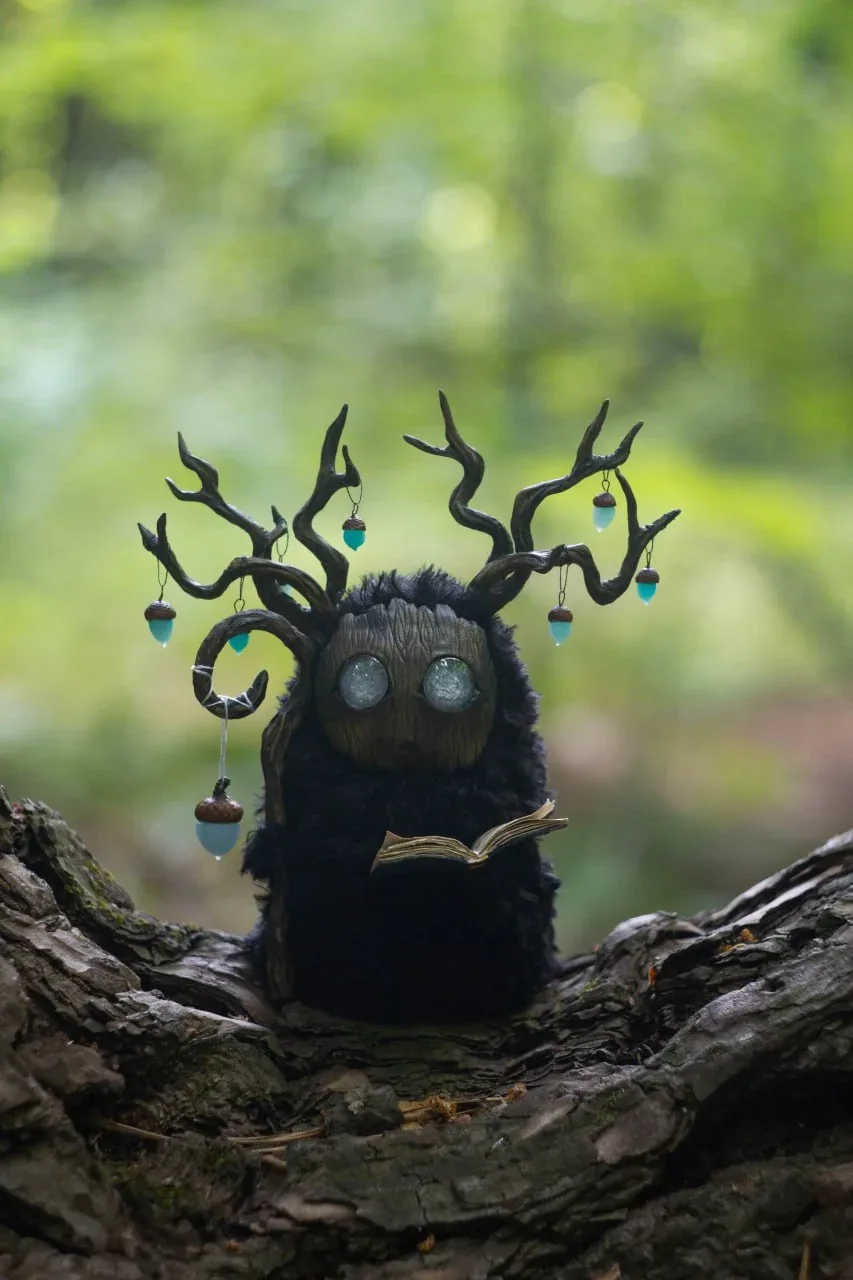
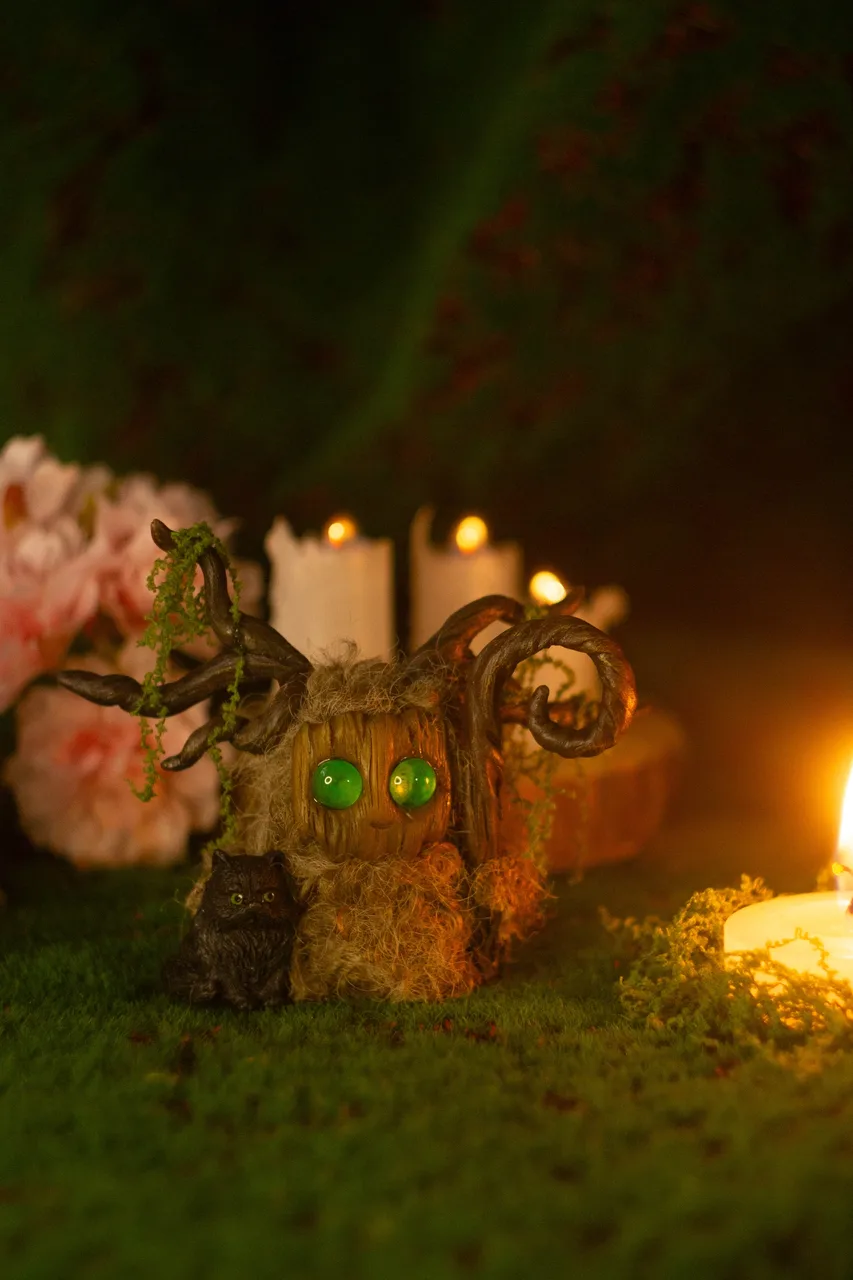
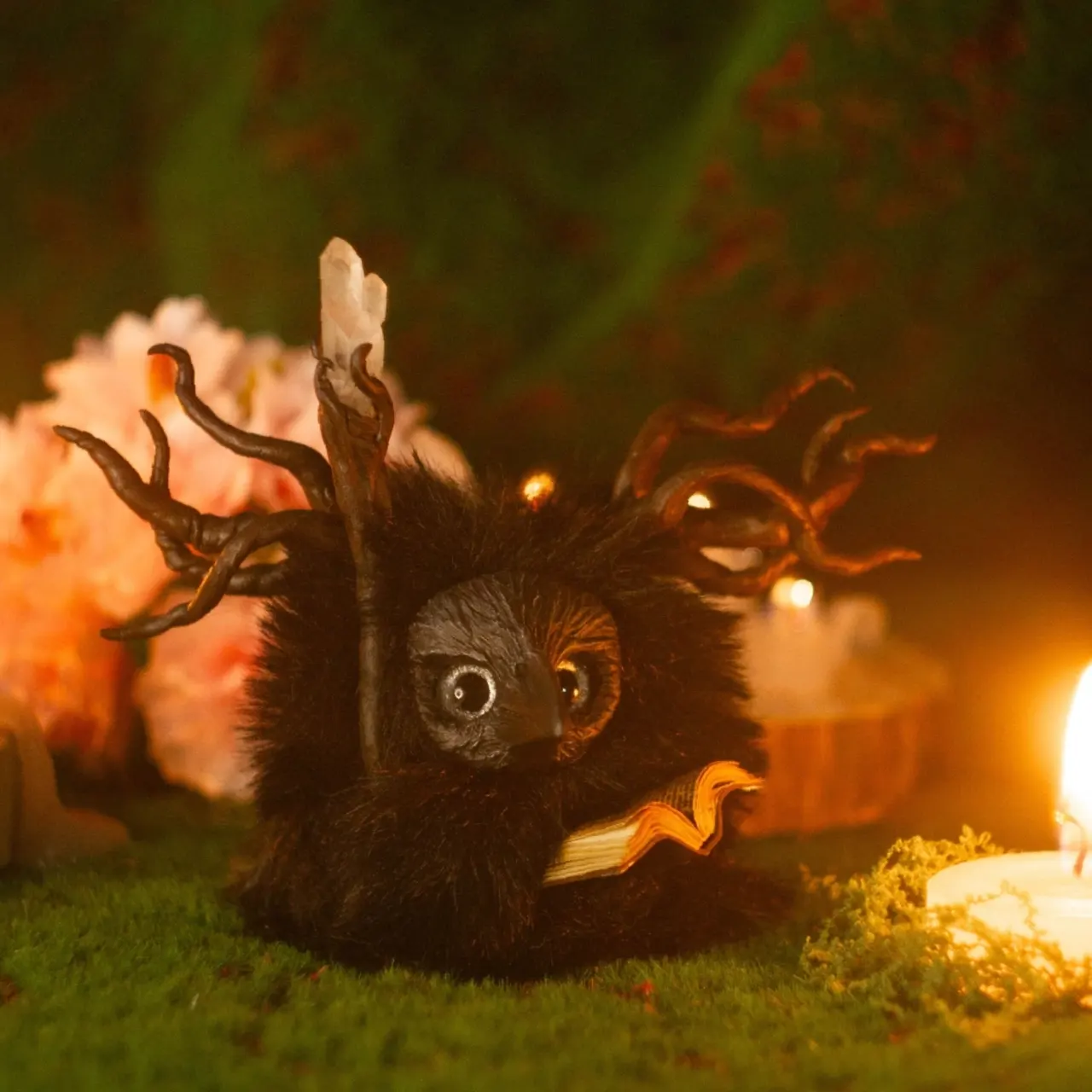
The Forest Shaman of the Magical Forest collection carries this in his eyes: the spring-thicket colour that glows from within, like small forest flames. He grew from an old stump at the crossroads of three paths — where the forest, in this tradition, thinks most carefully. The Omniscient Raven was born the night the last star of the old sky fell — and he has been reading ever since, in a book that never closes, because the story is not yet finished.
The Forest Sprite: Small Guardians of an Old World
Not all forest spirits are vast and powerful. Many traditions include a category of small, specific, intensely local presences — spirits attached not to the whole forest but to one tree, one clearing, one underground passage between the roots. In Irish folklore these were the síde — small beings who lived in hills and hollow places and appeared at the edges of human perception. In Scandinavian tradition they were the vættr — land-wights — beings whose territory was bounded, and whose displeasure at its violation was boundless.
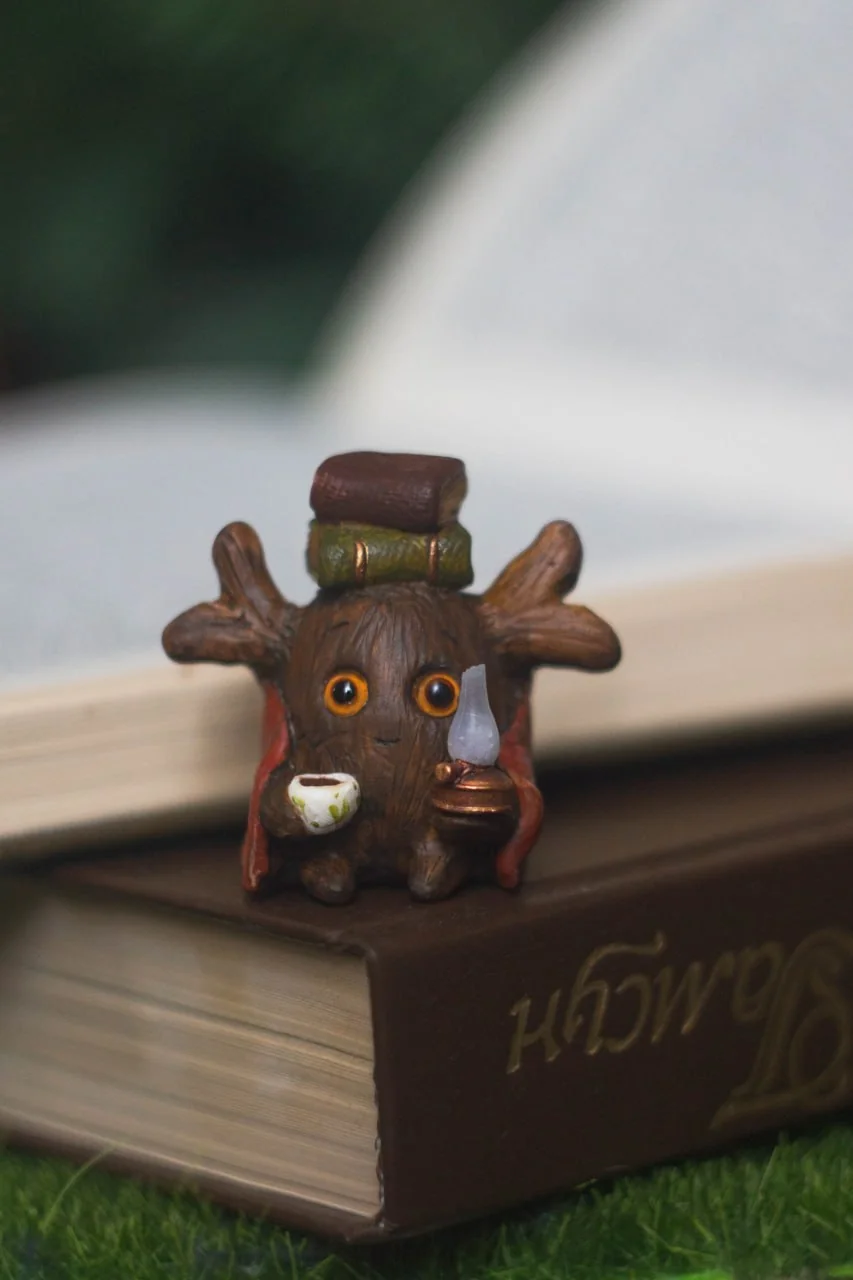
The Forest Sprites of the workshop inhabit this smaller, more specific stratum of the forest world. The Forest Sprite Wizard carries knowledge that is old enough to predate most written traditions. The Bookworm has turned his attention to the forest's own texts — the rings in trees, the patterns of lichen, the grammar of root systems underground. The Keeper of Secrets holds things the forest has heard over centuries: conversations at the edge of clearings, whispers at the roots of old oaks, everything said in the forest when humans thought they were alone.
The Faun: Where the Forest Meets the World Between
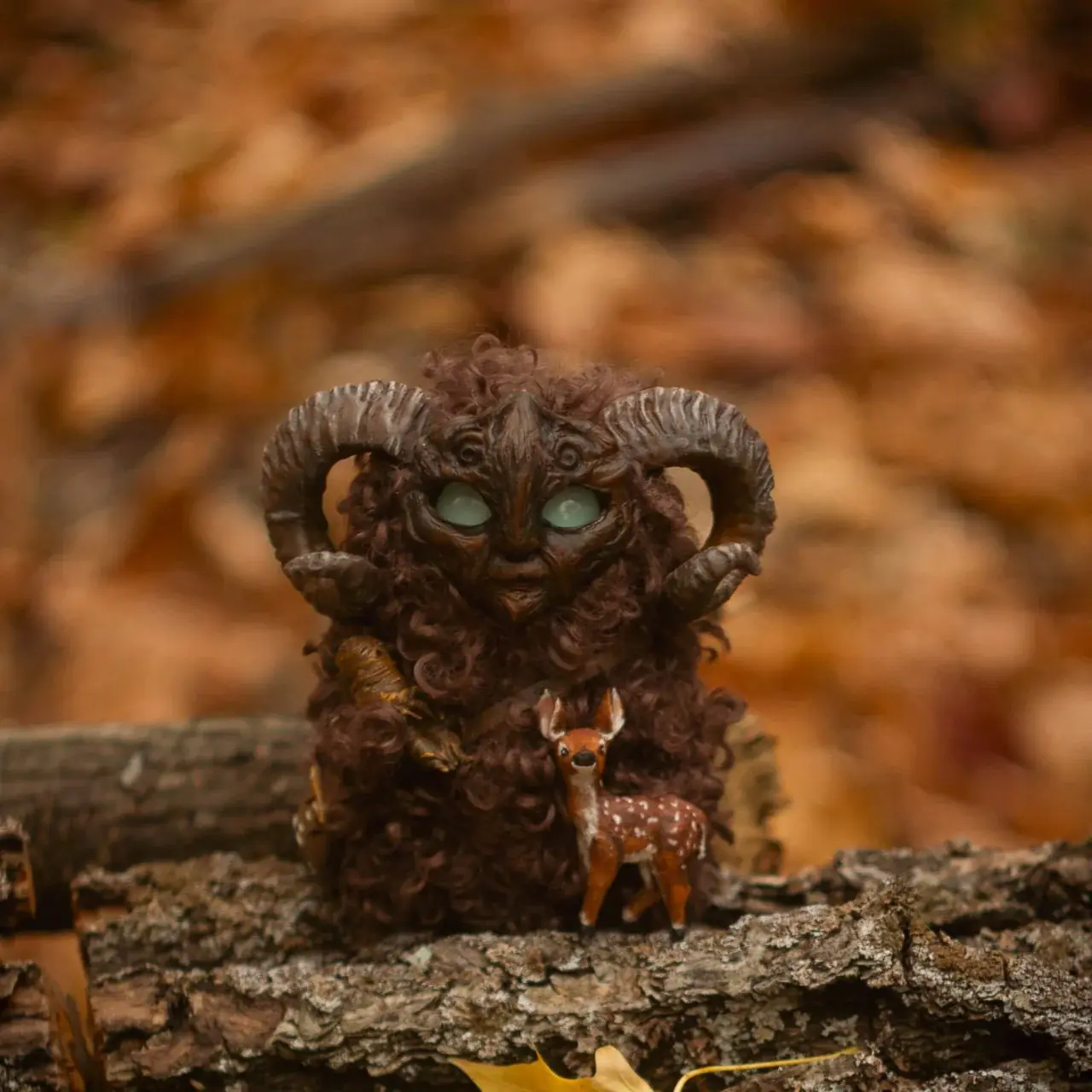
Among the Wood Spirits, the Wood Spirit Faun stands at a particular threshold. The faun in Roman mythology — and the equivalent Pan in Greek — was the spirit of the wild that existed in direct tension with the civilised world. Pan's cry is the origin of the word "panic": the sudden, sourceless fear that grips travelers in remote places. The faun was not simply a forest spirit but a forest spirit with a relationship to human consciousness — one who could unsettle it, who understood that the human mind's grip in the unfamiliar world was not always firm.
The Wood Spirit Faun carries this ambiguity. He is not the forest's king — that is too straightforward a role. He is something more liminal: the figure who appears at the edge of the forest and reminds you that the forest and the rest of the world are not separate places but one place with different rules applying in different parts of it.
The Owl and the Ancient Night
Among the oldest forest spirit traditions across world mythology, the owl occupies a special place. In almost every culture that lived beside forests with owls, the owl was associated with the spirit world — not because it was malevolent but because it was a creature of the boundary between day and night, visible in one and audible in the other, hunting in the hours when the human world is least confident of itself.
In Greek mythology, the owl was the companion of Athena — goddess of wisdom. In Roman tradition it was an omen bird, whose call predicted deaths not because it caused them but because it moved in the same layer of reality where those things were decided. In Slavic folklore the owl was associated with the spirit world more directly: its call heard near a house was an announcement from the other side.
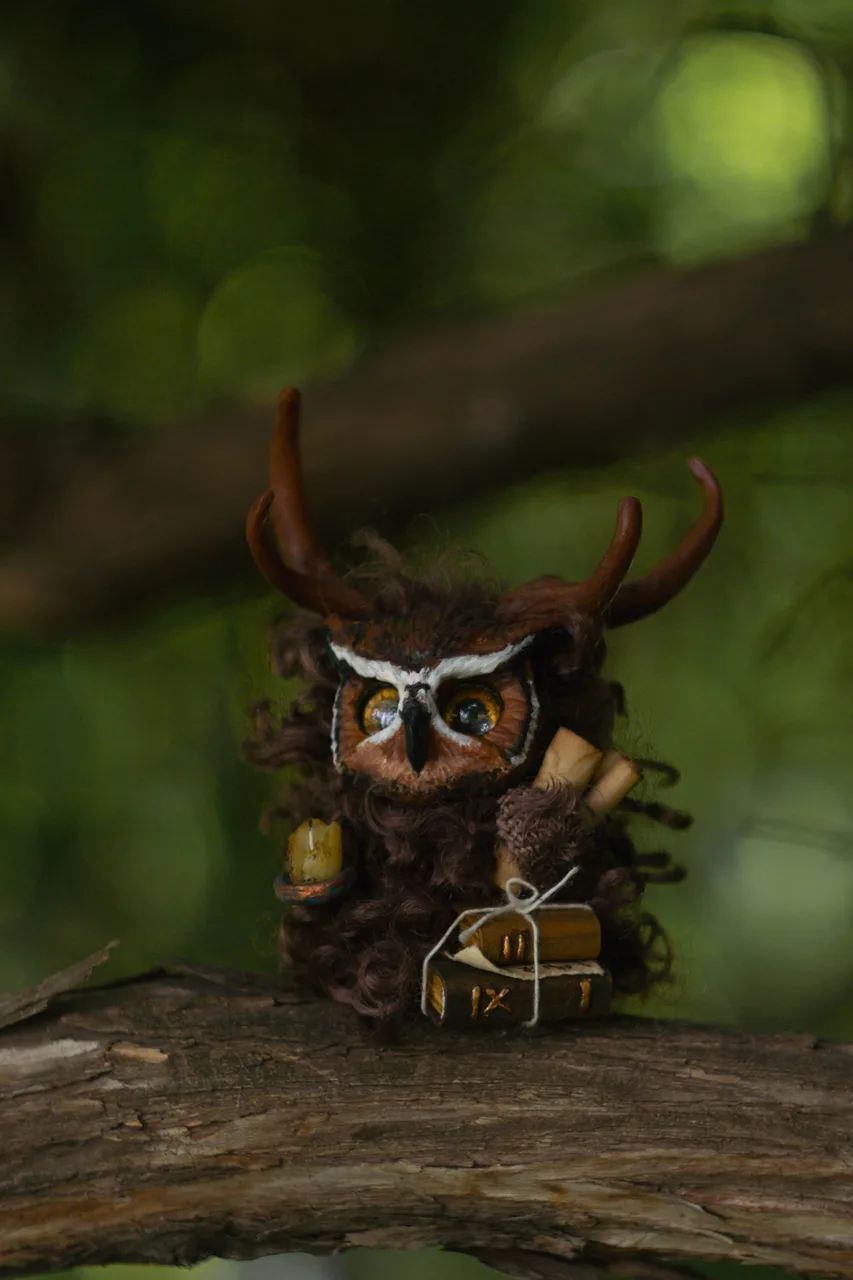
The Wise Owl of the August Twilight collection sits in the hollow of an old oak and reads by candlelight. He is calm, thoughtful, perceptive in the old sense of the word — he perceives things that are not ordinarily visible. His companion the Night Wanderer takes this further: he wears the mask of a barn owl, the white face that ghosts in and out of darkness, and his tin lantern appears and disappears through the trees in ways that suggest he is not entirely located in any one place at any one time.
Making the Invisible Visible
The tradition of making handmade figures of forest spirits is as old as the belief in them. Carved wooden figures of forest beings have been found at Slavic archaeological sites. Germanic traditions involved small carved figures placed at the edges of fields and forests as invitations or acknowledgements. The practice of giving the invisible a visible form is not decoration — it is a way of naming something, of acknowledging its existence, of creating a point of contact between the human world and the one that exists just past the tree line.
The creatures in this workshop exist in that tradition. The Rustle of Ancient Books appears where books have waited too long — the literary version of the same impulse that produced the belief that forests accumulated knowledge over centuries, that old places remembered. The Keeper of the Mushroom Glade brews something in his small red teapot that drifts across the forest on dark evenings: mushroomy, spiced, faintly intoxicating — the aroma of a space where the rules are slightly different from the ones you came with.
Every forest spirit tradition, however different in its particulars, encodes the same understanding: the forest is not a backdrop. It is a world. It has its own inhabitants, its own authority, its own memory. The question was never whether something lives between the trees — the question was always how to meet it well.
The creatures made here are an attempt at that meeting: visible forms for the things that move at the edge of the light, that know the paths between the roots, that have been reading the forest's own texts since before the first human walked under these particular trees. They are not imitations of mythology. They are its continuation — made by hand, one at a time.