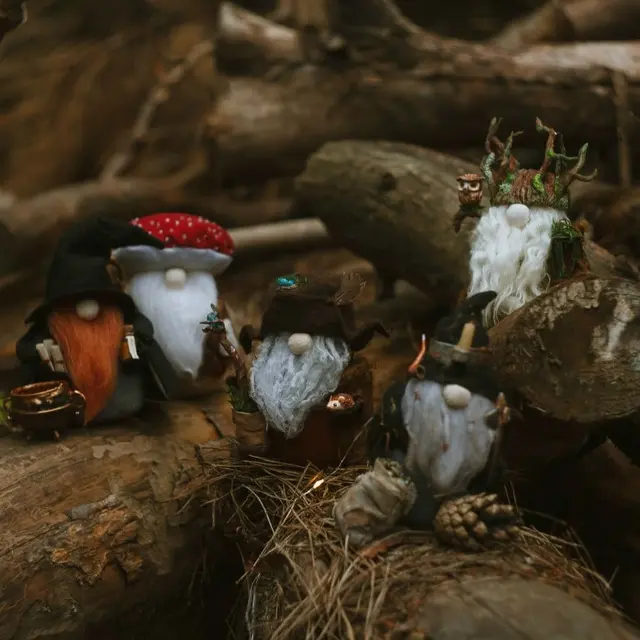
Somewhere in the back of a Scandinavian farmhouse — in the stable, under the floorboards, behind the barn wall — there lives a small, bearded figure. He has been there longer than anyone can remember. He works at night, keeps the animals calm, drives away bad luck, and expects nothing but a bowl of porridge on Christmas Eve. Forget the porridge, and you will regret it.
This is the nisse — known in Sweden as the tomte, in Finland as the tonttu, and under many local names across the Norse world. He is one of the oldest continuously imagined supernatural beings in Northern European culture. Long before gnomes became decorative garden figures or holiday icons, the nisse was a serious force: a guardian who could protect a household or destroy it depending on how he was treated. Understanding where he came from tells you a great deal about how the Norse world was organized and what people actually feared and revered.
Before the Gnome: Norse Spirits of Farm and Land
To understand the nisse, you have to go back further — to the pre-Christian Norse worldview, which divided the supernatural into categories that no longer have clean equivalents in modern thought. Among the most important were the landvættir (land spirits) and the fylgjur (following spirits, or attendants).
The landvættir inhabited specific places — a particular rock, a stream, a hillside, a stretch of forest. They were not gods to be worshipped from a distance but presences to be negotiated with. You could anger them by plowing too close to their territory, by making noise in the wrong place, by failing to leave offerings at certain times. Keeping them satisfied was part of farming. They were territorial, and so were the people who lived with them.
The fylgja was different — more personal. Every family had one, and possibly every individual. The fylgja followed the lineage, passing from generation to generation. It could appear in dreams, could take animal form (often a bear, a wolf, or a bird of prey), and its health or mood was bound up with the family's fortunes. Seeing your own fylgja was not a good sign — it usually meant death was near.
The nisse, as he eventually emerged in Scandinavian folk belief, carries traces of both. He is tied to a specific place (like the landvættr) and to a specific family lineage (like the fylgja). He is small and domestic where the old spirits were often vast and wild, but the underlying logic is the same: the land has presences, families have guardians, and the relationship between the visible and invisible worlds requires constant attention and respect.
The Nisse in Viking-Age Belief
The Viking Age (roughly 793–1066 CE) was not a period when people thought much about small, benign household spirits. It was a time of raids, long voyages, and the great Norse mythology of Odin, Thor and the Aesir gods. The household spirit was a quieter kind of belief, running beneath the mythology like groundwater beneath a river.
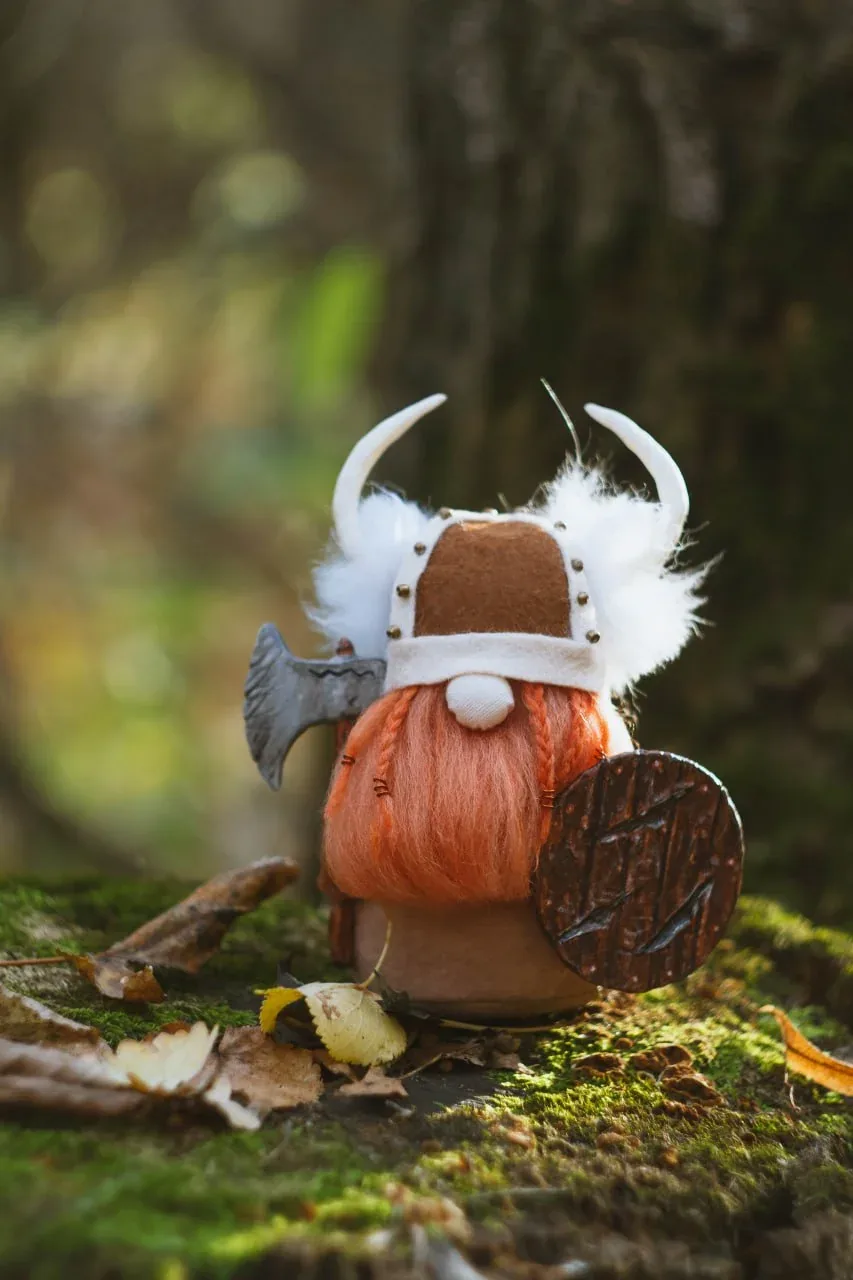
What the Viking Age did contribute to gnome tradition was the figure of the warrior-protector. The einherjar — the chosen dead who fought in Odin's hall, awaiting Ragnarök — were elite warriors, the best the world had produced. They were in some sense the ideal of the age: skilled, fierce, loyal to a cause beyond their own survival. This warrior ethos filtered into folk belief. Even a small household spirit, the tradition implied, should be someone you wouldn't want to cross. The nisse could be violent when provoked. He could drive animals mad, cause accidents, curse a farm's luck. He was not merely sweet. He had teeth.
Specific gnome archetypes carry this warrior lineage explicitly. The Einherjar Gnome takes his name directly from Odin's chosen warriors — a small figure carrying the weight of an entire cosmology. The Berserker Gnome embodies the most feared kind of Norse warrior: the one who fought in a state beyond ordinary consciousness, in the bear-spirit, unstoppable and terrifying.
The Christianization of Scandinavia and What It Did to Gnomes
When Christianity spread through Scandinavia — gradually, unevenly, from roughly the 10th through the 13th centuries — it changed everything about how the supernatural was mapped. The landvættir and fylgjur became more ambiguous: were they neutral spirits? Demonic presences? Something in between? The church's answer tended toward the demonic, but the church was not always in a position to enforce its taxonomy on remote Norwegian farms in midwinter.
What happened instead was a kind of negotiated coexistence. The old beliefs didn't disappear. They changed shape. The large, potentially dangerous land spirits shrank down into smaller, more manageable figures. The fylgja's connection to family lineage was preserved, but reframed: the nisse became not the family spirit but the family's helper, a distinct being who had chosen to attach himself to a particular farm and its people.
This reshaping was also gendered and moralized. The old Norse spirits were often amoral — powerful, to be respected, but not inherently good or bad. The Christianized nisse became more legible in moral terms: he rewarded virtue (hard work, order, proper offerings) and punished vice (laziness, cruelty to animals, disrespect). He was still not a Christian figure, but he operated in a world where Christian moral categories had become unavoidable.
What the Nisse Actually Is: Appearance, Character, and Rules
By the time nisse/tomte beliefs were being recorded systematically — in 17th- and 18th-century Scandinavian folklore collections — a remarkably consistent picture had emerged across Norway, Denmark, and Sweden, despite there being no central authority coordinating these beliefs. This consistency suggests deep roots and real cultural transmission.
The nisse is small — most descriptions place him between knee-height and waist-height of an adult human. He wears grey, brown, or homespun clothes — the colors of the farm, of wool and undyed linen. His hat is his most distinguishing feature: a red pointed cap, sometimes described as wool, sometimes as felted. The beard is always present and always substantial — often described as grey or white and reaching the floor.
He is nocturnal by preference. He does the work that needs doing after the household has gone to sleep: grooming horses, stacking hay, fixing what has been broken carelessly, keeping watch. He asks for almost nothing, but what he asks for he asks for absolutely: the annual Christmas porridge (with butter), and respect. Mocking him, forgetting the offering, or speaking of him dismissively to outsiders are all serious mistakes.
The punishment for disrespect is proportionate to the offense and then some. He might move things. He might make the animals sick. He might turn the family's luck entirely — the farm begins to fail, cows stop producing, fields yield nothing. In extreme cases, he leaves entirely, and when a nisse leaves a farm, the farm's good fortune leaves with him.
The Nisse and the Dead: An Ancestor Spirit?
One of the most persistent theories about the origin of the nisse — proposed by Swedish folklorist Carl Wilhelm von Sydow and elaborated by later researchers — is that he began as an ancestor spirit. Specifically, the spirit of the first person buried on a farm's land, who remained to protect what he had built.
The Norse world had a rich tradition of mound-dwellers: the dead who remained in or near their burial places and could still influence the living. The first settler who broke ground on a farm and who was, according to the custom of many regions, buried on that land, had a particular stake in its continued prosperity. His spirit, in this reading, never entirely left. It remained in the barn, under the threshold, in the oldest part of the structure.
This would explain several things about the nisse that are otherwise difficult to account for: why he is attached to the land rather than the family (he predates any particular family that lives there); why he is so invested in the farm's upkeep and prosperity; why mistreating the land or the animals is an offense against him personally. He is, on this theory, the land's memory.
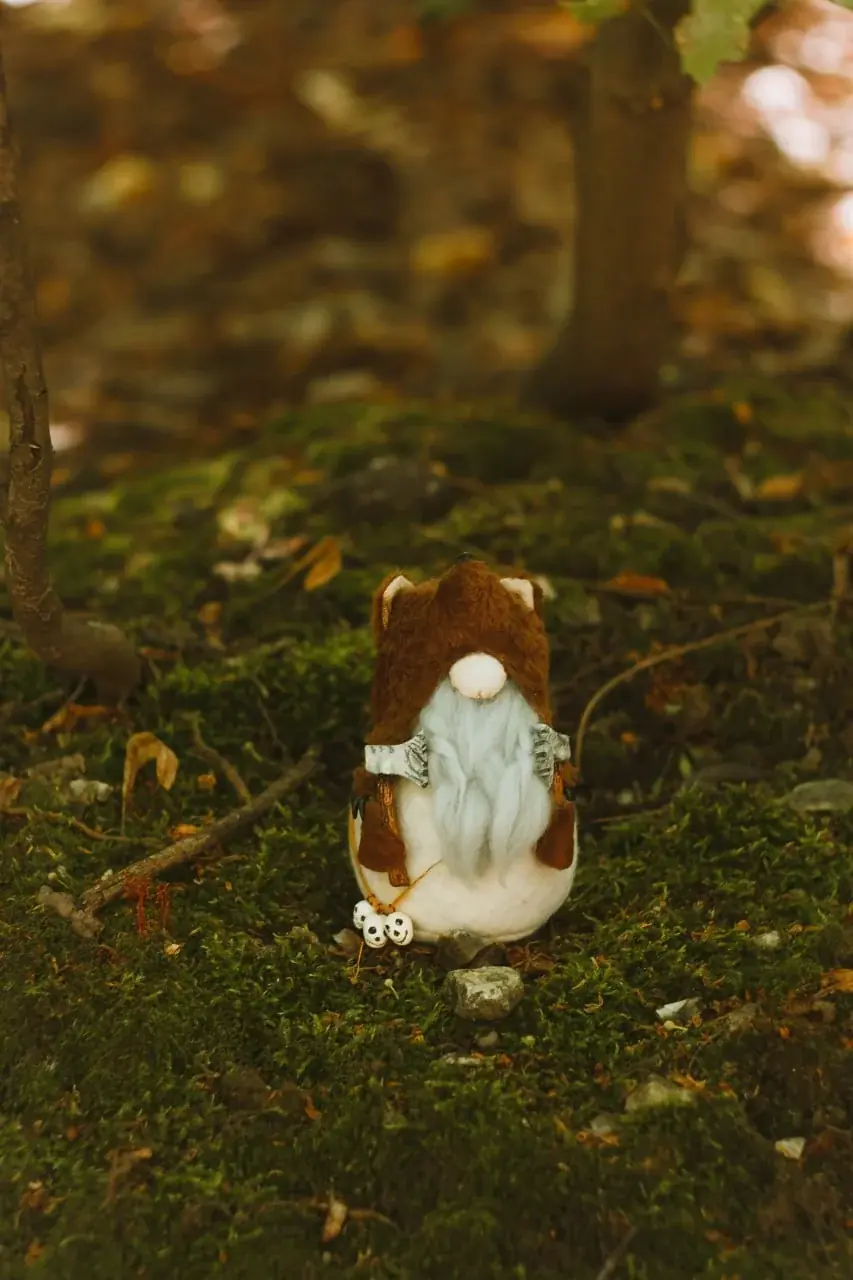
The Old Friend Gnome captures something of this quality — a figure who has seen much, who remembers what others have forgotten, whose presence on the farm is a form of living continuity between the present and a past that has otherwise disappeared.
The Shaman Gnome: Magic Workers of the Norse World
Alongside the household guardian tradition, the Norse world had its own tradition of spirit workers and magical practitioners. The seiðr — a form of Norse magic associated particularly with Odin and with the Vanir deity Freyja — was practiced by specialists who could travel between worlds, communicate with spirits, and influence fate. These practitioners (the völva and seiðmenn) occupied an unusual and sometimes ambiguous social position: necessary, powerful, not entirely safe to be around.
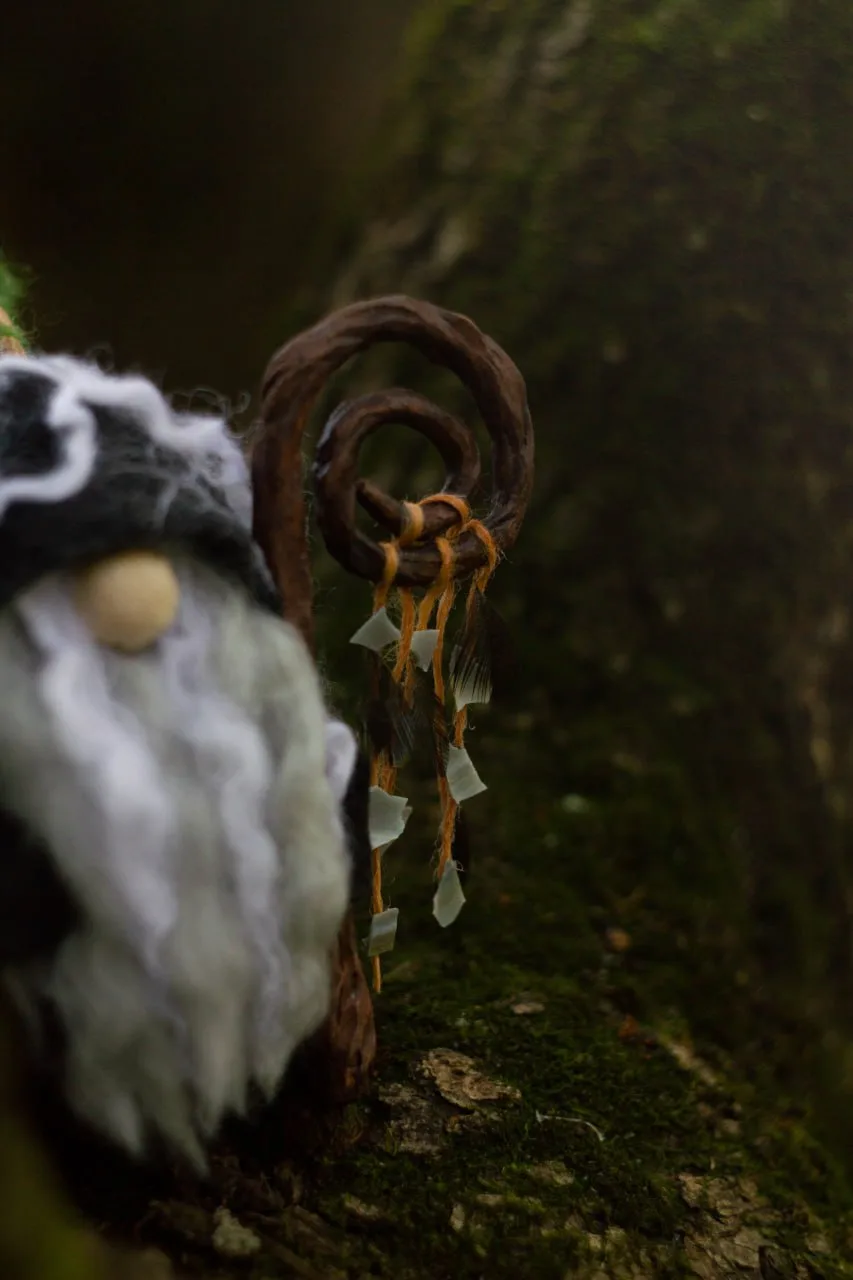
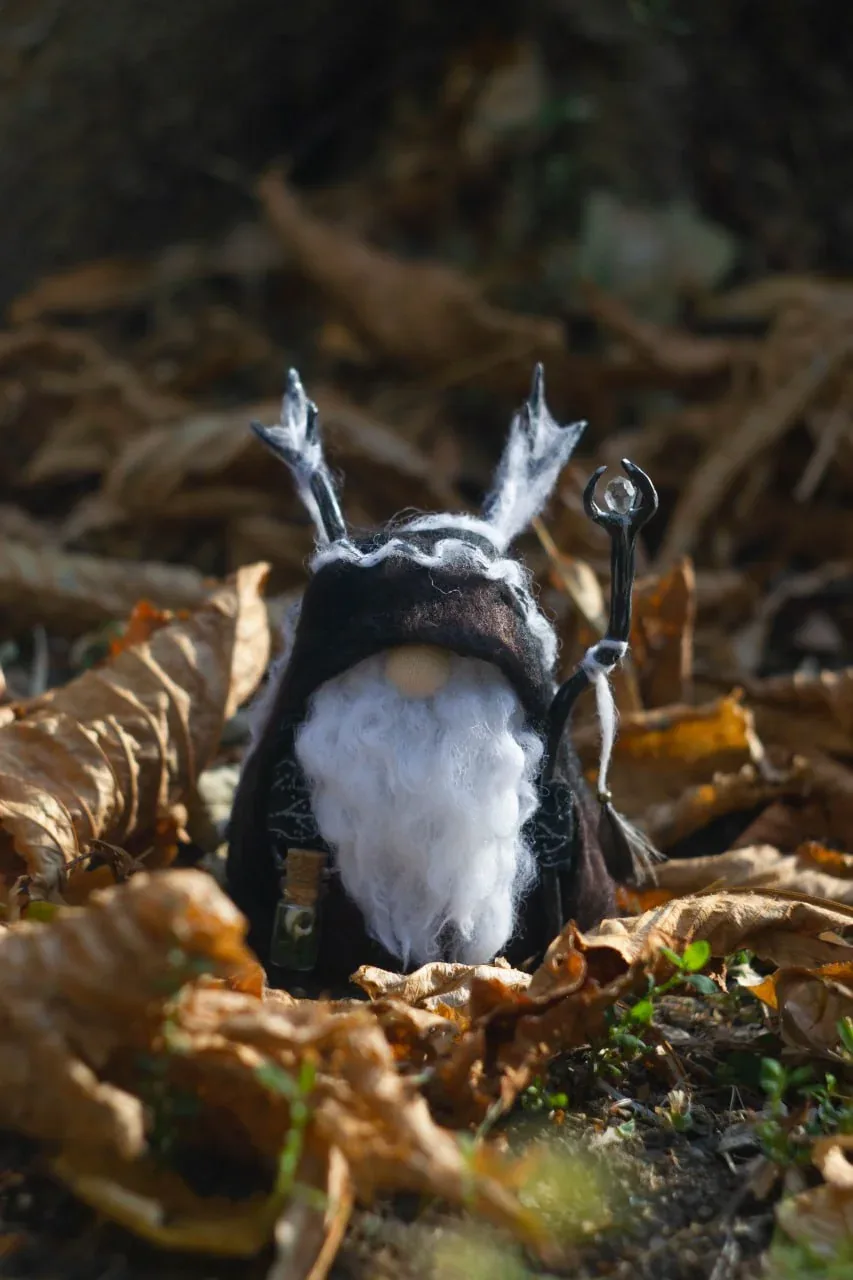
The gnome tradition absorbed something of this figure too. The shaman gnome is the nisse as a worker of deeper magic — not just a farmyard guardian but someone who moves between the ordinary world and what lies beneath it. He carries a staff, works with animals associated with Odin (ravens, wolves), and wears the antlers that mark connection to the older world of spirits before the gods.
The Gnome's Beard: More Than Decoration
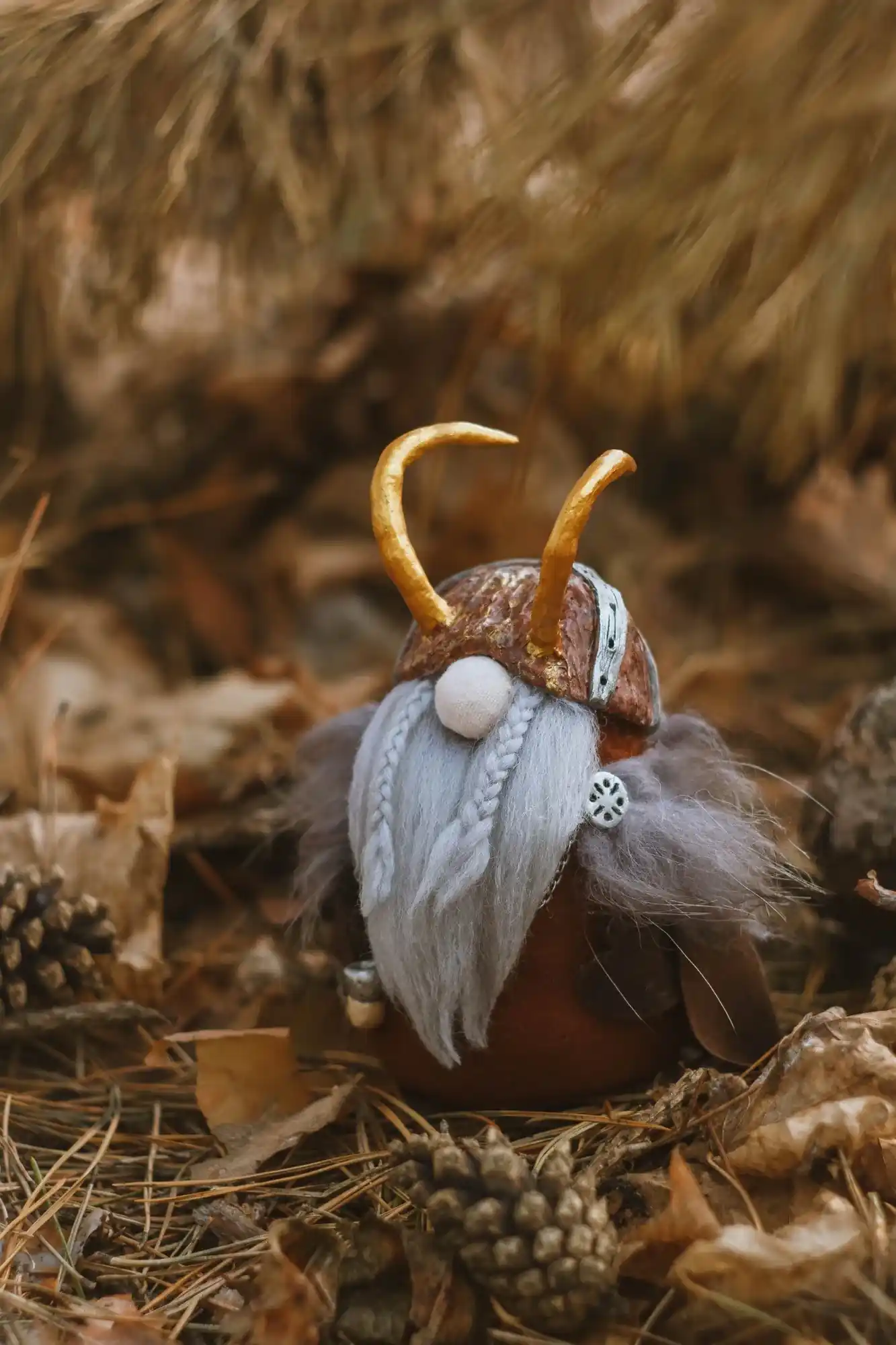
Every Scandinavian gnome has a beard. This is not arbitrary. In Norse culture, a beard was a marker of full adult male status — a free man, a householder, someone whose word carried weight in the assembly. The beard of the gnome is always extraordinary: white or grey, long enough to reach the ground in many descriptions, sometimes braided or tied. This is not the beard of a young warrior. It is the beard of someone who has been alive for a very long time.
The long beard signals a particular kind of authority: not the authority of strength or rank, but the authority of accumulated time. The gnome has watched the farm through seasons no living person remembers. His knowledge of the place is deeper than anyone else's. The beard is the visible mark of this temporal depth.
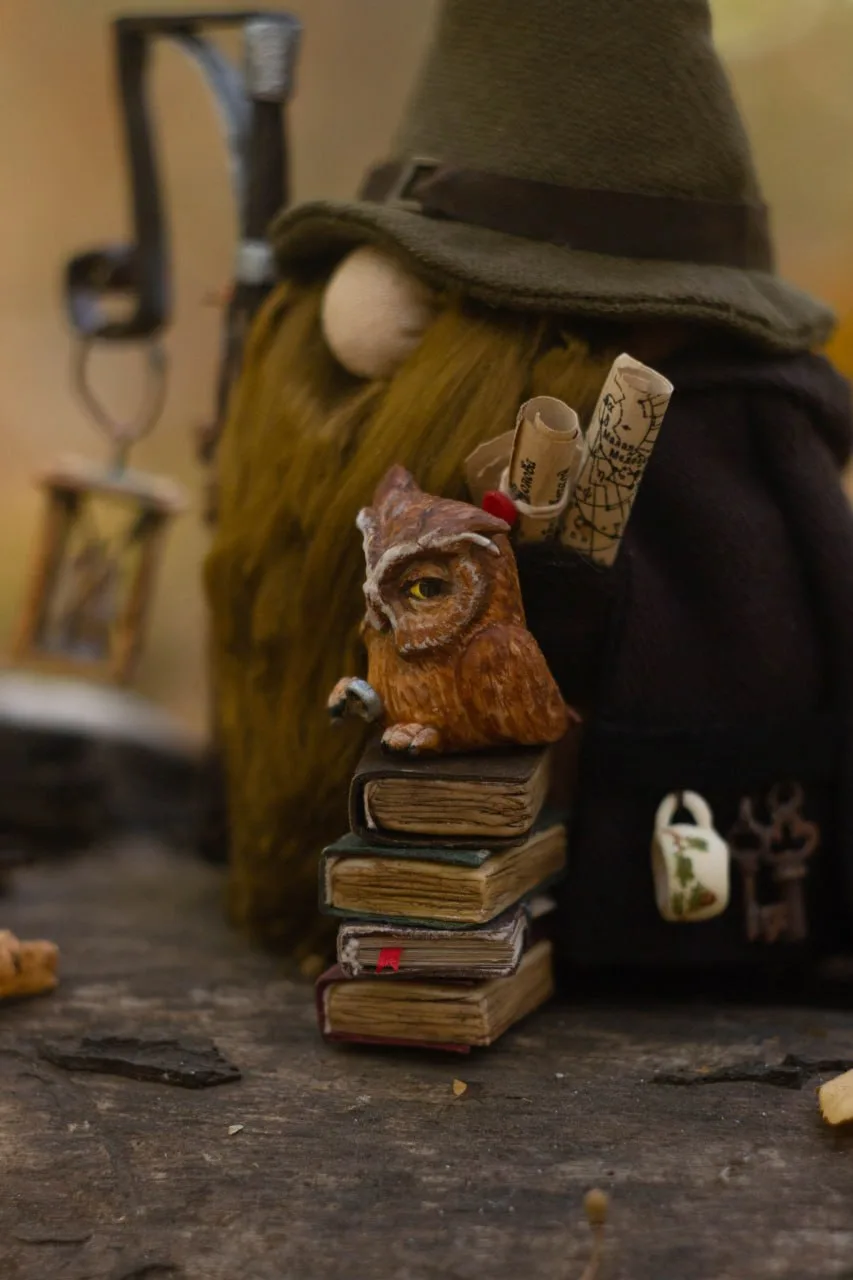
Many gnomes in the workshop carry this depth in their faces and posture — the sense of someone who has seen a great deal and is not easily surprised. The Archivist Gnome, with his books and owl and lantern, is perhaps the clearest embodiment of this kind of ancient, accumulated knowing.
From Farmyard to Christmas: The Nisse's Long Journey to Modernity
The transformation of the nisse into the Christmas figure known across Scandinavia today — small, cheerful, red-hatted, bearing gifts — happened largely in the 19th century, through a process that mirrors what happened to many folk figures in that era. Industrialization and urbanization were emptying out the old farm-based culture that had sustained the nisse belief. As the actual farms disappeared, their guardian spirits became nostalgic objects: figures of a lost rural world that people wanted to preserve in some form.
Swedish artist Jenny Nyström was particularly influential: her illustrations of the tomte, beginning in the 1870s, established the cheerful, red-hatted, gift-carrying Christmas gnome as a visual archetype that spread throughout the Nordic countries and eventually the world. The association with Christmas solidified because December was already the time of year when the nisse was most present in folk belief — the annual porridge offering happened at Christmas — and because the warming, protective, gift-giving qualities of the figure mapped naturally onto the gift-giving season.
The nisse's connection to the Danish-Norwegian figure of the Julenisse (Christmas gnome) and eventually to modern Scandinavian Christmas traditions is the reason that gnomes in general are now associated with winter and the holiday season in many cultures. But this is only one chapter of a very long story.
What the Gnomes Carry: Making Tradition by Hand
When I make a gnome, I am working in a tradition. The long beard, the pointed hat, the small scale, the sense of deep time — these are not arbitrary design choices, but a reflection of it.
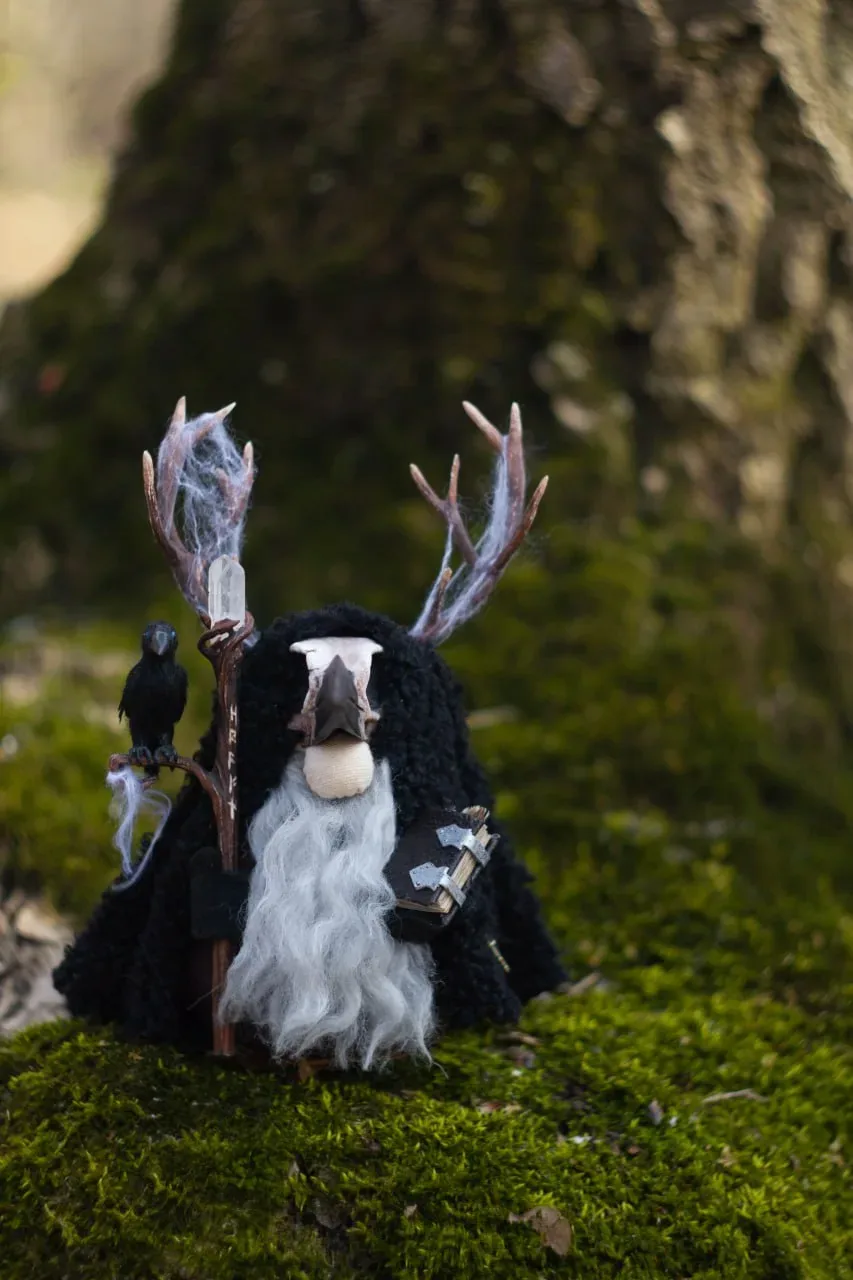
What handcrafting allows, that mass production doesn't, is specificity. A Kark Gnome with his raven and grimoire and quartz-crystal staff is not a generic gnome. He carries a particular strand of the tradition — the magical practitioner, the worker of darker arts, the figure who knows things he should probably not know. A Sea King Gnome carries the seafaring strand — the Norse world was as much an ocean world as a land world, and its spirits reflected this. A Stargazer Gnome carries the astronomical thread — the Norse calendar was built on careful sky-watching, and the gnome who watches stars is not decorative but functional in the deepest possible sense.
The Gnome Catalogue: A Field Guide to Traditions
The workshop's collection of gnomes spans the full range of what the Scandinavian gnome tradition contains — from the warrior-guardian to the scholar, from the shaman to the herbalist, from the sea-rover to the one who has simply been on the same farm for so long that he and the land have become indistinguishable. Here are some who most directly embody specific strands of the tradition:
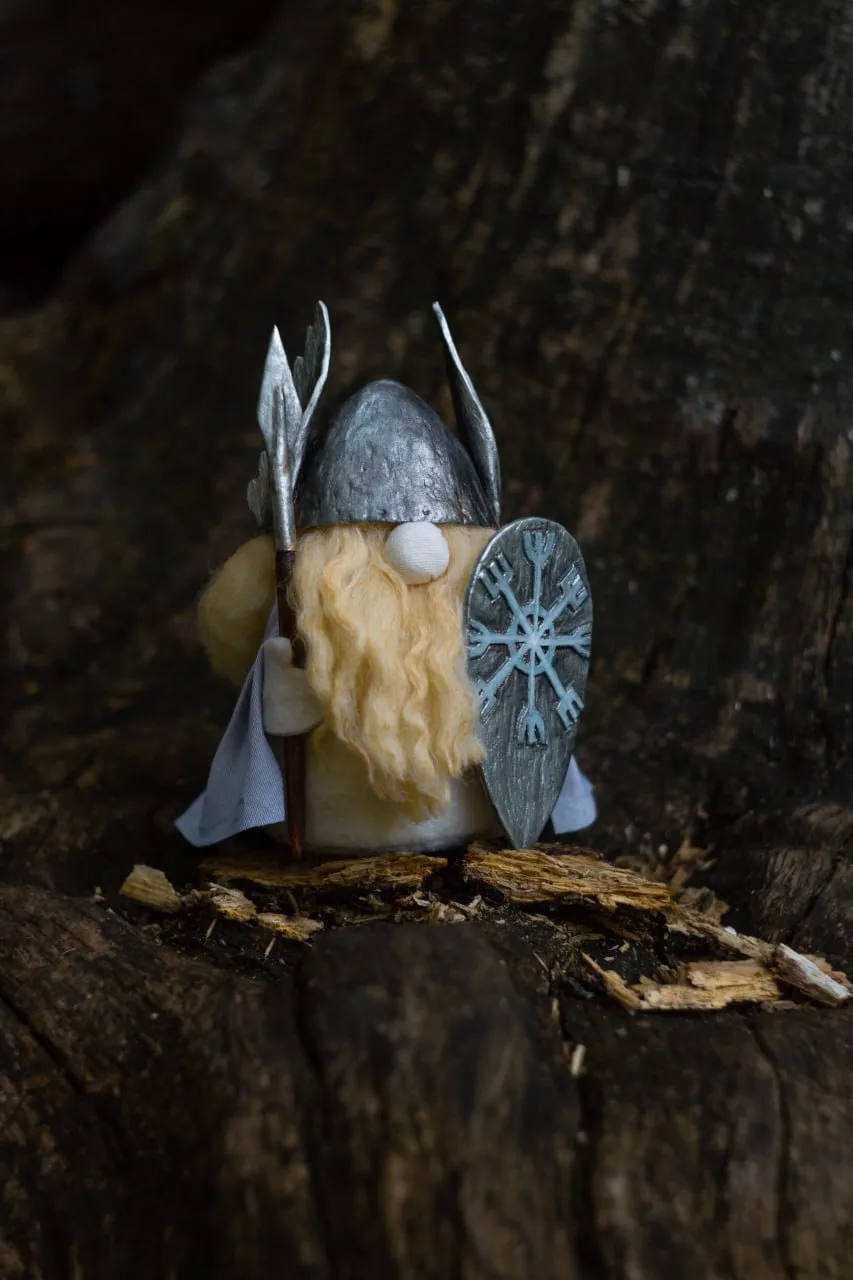
The Viking Gnome carries the seafaring, raiding, exploring strand — the Norse world as a world in motion. The Einherjar Gnome carries the warrior-elite strand — Odin's chosen dead, the best of the best. The Berserker Gnome carries the bear-warrior strand — the fighter who enters a state beyond ordinary consciousness. The Konung Gnome carries the chieftain strand — the Old Norse word for king, the one who holds the people together.
The Shaman Gnome and the Raven Shaman Gnome carry the magical practitioner strand — the seiðr worker, the one who moves between worlds. The Kark Gnome carries the darker knowledge strand — magic that is not comfortable, power that comes at a cost. The Archivist Gnome carries the knowledge-preservation strand — the keeper of runes, of records, of what must not be forgotten.
The Gnome Herbalist carries the healer-of-the-land strand — in Norse tradition, knowledge of plants and their properties was a form of power as real as any weapon. The Old Friend Gnome and the Vampire Gnome carry the strand of the ancient and place-bound — those who have been here longer than memory. The Sea King Gnome carries the ocean strand — the Norse world that extended all the way to Iceland, Greenland, and the coast of North America.
The full catalogue contains many more gnomes beyond these — each with their own character, materials, and strand of the tradition. You can browse them all in the Gnomes catalogue.
A gnome is not a decoration. He is a position: someone standing between the household and whatever is outside it, watching both, loyal to the ones he has chosen — and expecting, quietly but absolutely, to be remembered.
The Scandinavian gnome tradition spans more than a thousand years of continuous imagination. It has survived the Christianization of the North, industrialization, urbanization, two world wars and the complete transformation of the rural world that originally gave rise to it. It has done this because what it encodes — the idea that places have presences, that loyalty runs between the visible and invisible, that the old and the small can carry great power — is not a medieval superstition. It is a way of paying attention to where you are and what you owe to it.
That is why gnomes endure. Not because they are charming, though they are. But because the need they answer is real.